


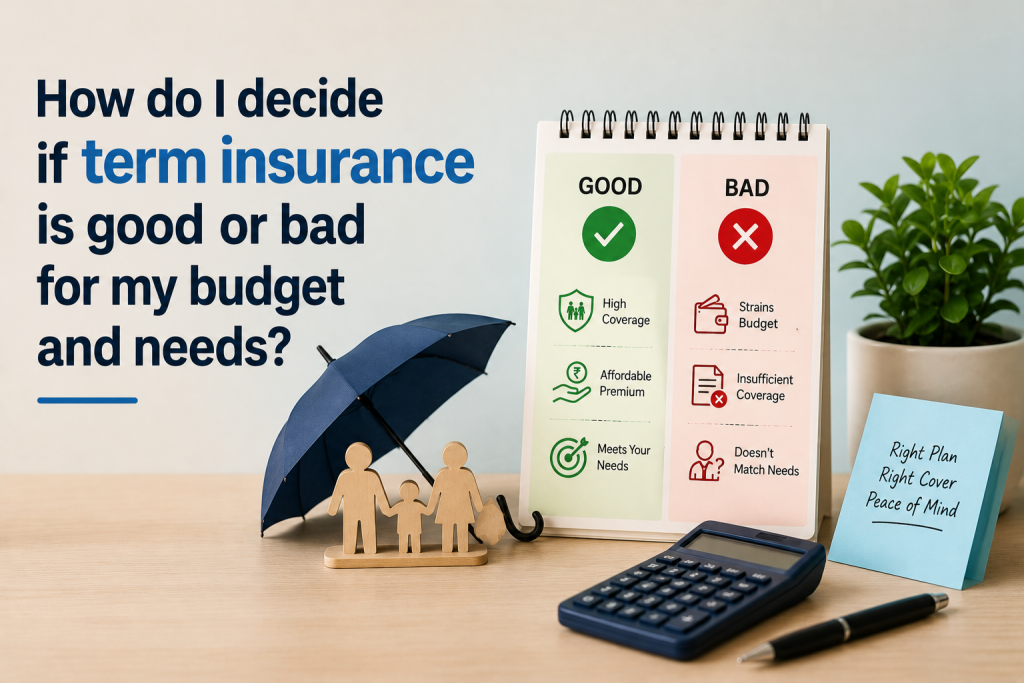
term insurance is not a complex product. it answers one question. if the primary earner is not around, can the family manage financially.
whether it fits a budget and needs depends on the specific situation. not on what a friend bought. not on what an agent recommends.
here is a framework to decide. based on three filters. dependency profile. budget. goals.
filter one. does the buyer have dependents
term insurance is pure protection. it pays a lump sum if the policyholder dies during the policy term. if the policyholder survives the term, nothing is received.
this structure works for one specific situation. people depend on the policyholder’s income.
who needs term insurance.
- young professionals with dependents. spouse or parents rely on the income.
- parents with home loans or education responsibilities. a child’s future depends on earning capacity.
- single breadwinners. the only income source for the family.
- anyone needing temporary high-value protection. coverage until the youngest child is financially independent.
who does not need term insurance.
- no dependents. no one relies on the income. the payout has no one to protect.
- financially independent. enough assets to support the family without insurance.
- near retirement with sufficient savings. dependents are already self-sufficient.
filter two. is the premium within budget
term insurance is the most affordable form of life cover. affordability is relative.
a healthy 30-year-old non-smoker can get ₹1 crore cover for around ₹10,000-12,000 per year. that is roughly ₹850-1,000 per month. less than a meal out for a family.
for someone earning ₹25,000 per month, 10-15 times annual income suggests coverage of ₹30-45 lakh. premiums for this range start under ₹500 per month.
two tests for budget fit.
one. does the premium strain monthly cash flow. if paying the premium forces skipping other essentials, the policy is overbought.
two. does coverage reduce because the lowest premium was chosen. many buyers purchase too little cover because the premium feels low. that defeats the purpose.
| monthly income | recommended coverage |
monthly premium range |
| ₹25,000 | ₹30-45 lakh | ₹300-500 |
| ₹40,000 | ₹72 lakh – ₹1 crore | ₹450-800 |
| ₹1,00,000 | ₹1.2 – ₹1.5 crore | ₹1,000-1,500 |
premium ranges are estimates. actual depends on age, health, and smoking status.
filter three. what does the buyer expect from insurance
term insurance does one thing. protection. no investment. no savings. no maturity benefit.
if money is expected back on surviving the term, a different product is needed. return of premium (rop) plans exist. they cost significantly more. for the same ₹1 crore cover, premiums can be 3-4 times higher.
if investment returns are expected, term insurance is the wrong product. buy a term plan. invest the premium difference separately. that typically yields more money.
a quick framework to decide
|
situation |
should term insurance be bought |
| has dependents. needs affordable protection. understands that survival means no payout. | yes. term insurance is the right choice. |
| has dependents. wants money back on survival. | consider rop. compare cost vs pure term + investing the difference. |
| no dependents. enough savings. | skip. life insurance is not needed. |
| has dependents. cannot afford premium for adequate cover. | buy a smaller cover. upgrade when income grows. |
what to look for in a plan
if term insurance fits the needs, evaluate these metrics.
claim settlement ratio. percentage of death claims approved. industry average is 98.66%. look for insurers above 99%.
amount settlement ratio. what percentage of claimed amount actually gets paid. a company can approve 99 claims out of 100 but pay only 80% of the amount. this matters. look for asr above 95%.
solvency ratio. assets to liabilities ratio. irdai minimum is 1.5. look for above 1.80.
FAQs
1. is term insurance worth it if the policyholder survives the term ?
A. yes. protection was paid for during the highest risk years. the family was covered when risk was highest. that is value.
2. what if the employer provides life cover ?
A. employer cover is a bonus. it ends when the job ends. rarely enough to protect the family fully. buy an individual plan. ensure continuity.
3. can term insurance be bought online ?
A. yes. online plans are usually cheaper due to lower distribution costs. compare plans. buy from a reputable insurer.
4. how much cover should be bought ?
A. 10-15 times annual income is a starting point. factor in outstanding loans. factor in future goals. buy what the family would need.
5. should riders be added ?
A. only if useful. critical illness rider can help if diagnosis happens before death. accidental disability rider can be valuable. do not buy riders just because they exist. add only what the situation needs.


