


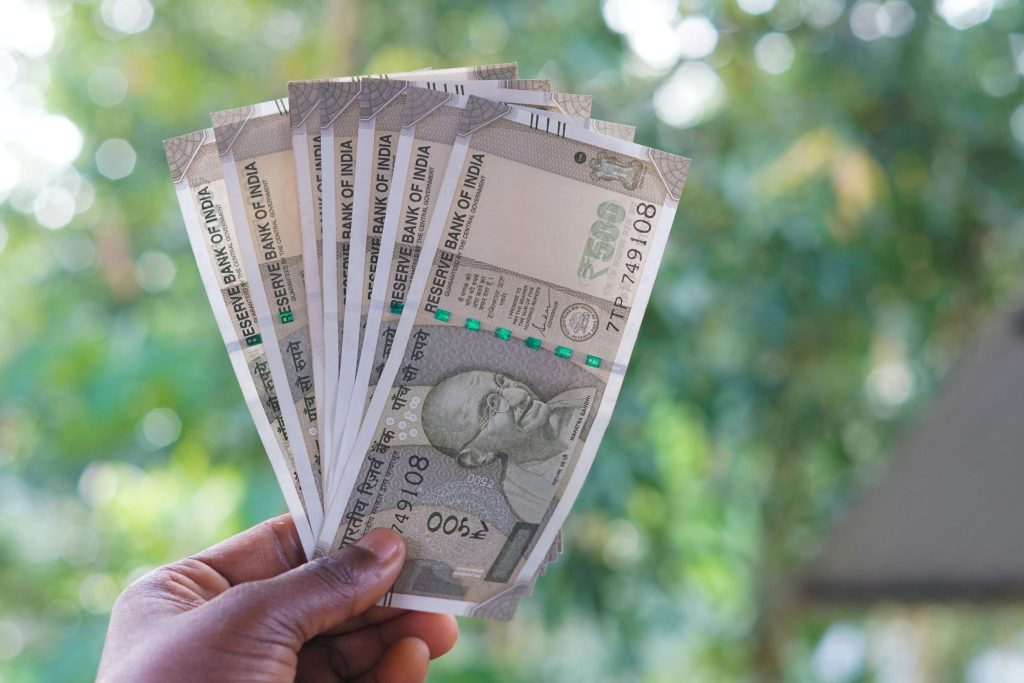
The decision to buy a US stock is simple. The money movement behind it is not.
Every rupee that leaves India for a US brokerage account goes through a conversion process with steps. There is the exchange rate itself. There is the added cost the bank adds on top. There is GST on the conversion service.. There is the TCS threshold that stops cash once remittances go over a certain limit in a financial year.
Most investors look at the brokerage fee before buying a US stock. Almost no one checks the exchange rate compared to the interbank rate. That is where the bigger cost is.
the route: lrs is the only way
Indian residents can invest in US stocks under the Reserve Bank of Indias Liberalised Remittance Scheme. The scheme allows a resident individual to send up to $250,000 per year for permitted overseas investments, including foreign securities.
The money moves in rupees. The bank converts it to dollars. Sends it to the overseas brokerage account. When the shares are sold the money stays in the dollar account. Can be brought back to the Indian bank account when needed.
Only individuals can use LRS. Corporate entities, HUFs and partnership firms are not allowed.
the interbank rate and the spread
The interbank rate is the rate at which banks trade dollars with each other. It is the thing to a true market rate. The FBIL reference rate, computed from spot transactions between 11:30 AM and 12:30 PM each business day is the benchmark most banks use internally.
No retail investor gets the interbank rate. The bank adds a markup. That markup is the spread. It varies by bank and by platform. Paasa offers ₹0.60 to ₹0.90 over the -market rate with its partner banks. Vested and INDmoney have spreads up to ₹1.25 1.2% to 1.5%. Opening an account directly with Interactive Brokers means using the banks rate, which runs 1.8% to 3% over the mid-market.
The spread is part of the rate the investor sees. It is not a line item. That is why it is easy to miss.
the costs stacked on top of the spread
GST at 18% on the conversion service. The tax is not applied to the amount. It is applied to the service value of the currency conversion calculated using government-prescribed slabs. For amounts up to ₹1 lakh the service value is 1% of the transaction. For ₹1 lakh to ₹10 lakh it is ₹1,000 plus 0.5% of the amount above ₹1 lakh. Above ₹10 lakh it is ₹5,500 plus 0.1% of the amount above ₹10 lakh. The GST is shown upfront before the transaction is confirmed.
Bank processing or remittance fee. A flat charge of ₹500 to ₹1,000 per transaction depending on the bank. GST at 18% applies to this fee well.
TCS above ₹10 lakh. Total LRS remittances for the financial year cross ₹10 lakh TCS applies at 20% on the amount above the threshold for investment remittances. This is not a cost. It is a tax payment that appears in Form 26AS and gets adjusted when the return is filed.. It blocks cash until the refund is processed.
An example: remitting ₹12 lakh to a US brokerage account attracts no TCS on the ₹10 lakh and ₹40,000 on the remaining ₹2 lakh. The bank debits ₹12,40,000 and ₹12 lakh lands in the brokerage account.
the conversion cost hits twice
The same spread applies when the money comes back. An investor who sells $1,200 worth of stock and converts it to rupees at a spread of ₹0.70 per dollar loses ₹840 on the return leg. The stock performed as expected. The conversion did not.
This is why the total cost of investing is often described as a round-trip expense. Vesteds co-founder estimated that a customer can spend about 3% on spreads for both-side remittances.
how the exchange rate shapes rupee returns
The stocks performance in dollars is one part of the return. The other part is what happens to the rupee-dollar rate between purchase and sale.
Dividends behave the way. A $100 dividend is worth ₹9,500 at ₹95 per dollar and ₹10,500 at ₹105. The dollar amount did not change. The rupee value did.
The rupee has depreciated 25% against the dollar over the past decade an average of about 2.5% per year. That trend has generally worked in favor of investors holding dollar assets. It is not guaranteed to continue. It does not move in a straight line.
what happens at tax time
The conversion rate used for tax is not the rate the bank quoted. For capital gains computation the sale proceeds and cost of acquisition are converted using the SBI Telegraphic Transfer buying rate on the day of the month immediately preceding the month of sale.
The gap between what the investor received and what the tax computation assumes can create a mismatch. The bank spread is an economic cost but it is not deductible from the taxable gain.
Foreign shares are treated as securities under Indian tax law. The long-term holding period is 24 months. Gains past that point are taxed at 12.5% without indexation. Sell earlier. The gain is added to income and taxed at the slab rate.
the reporting requirement
Once the account is funded it is an asset. A Resident and Ordinarily Resident taxpayer must disclose the brokerage account and each US shareholding in Schedule FA of the income tax return whether or not any gains were made.
Schedule FA follows the calendar year from 1 January to 31 December while the rest of the ITR follows the year. The mismatch is. A working paper that maps the two periods makes the filing easier.
Non-disclosure carries exposure under the Black Money Act with penalties that far exceed the tax itself.
what retail investors should take from this
The conversion cost is the controllable expense in US stock investing. Brokerage fees are visible and competitive. The spread is neither.
The GIFT City route is worth checking for this reason. India INX Global Access has negotiated spreads with partner banks and does not earn from the spread itself passing the saving to clients. For investors who remit regularly the difference is not marginal.
The rupee return is not the dollar return. Both. The second one depends on an exchange rate that no one controls.
FAQs
1. What is the interbank rate. Why does it matter?
The interbank rate is the rate at which banks trade dollars with each other. It is the thing to a true market rate. No retail investor gets it. The bank adds a markup. That markup is the hidden cost in every remittance.
2. What is the GST on currency conversion?
18% GST applies to the service value of the conversion not the full remittance. The service value is calculated using slabs. For amounts above ₹10 lakh it is ₹5,500 plus 0.1% of the amount above ₹10 lakh.
3. When does TCS apply on remittances for US stocks?
Once total LRS remittances for the year cross ₹10 lakh. The rate is 20% on the amount above the threshold, for investment remittances. TCS is not a cost. It is a tax payment that appears in Form 26AS and is adjusted when the return is filed.
4. How does the rupee-dollar rate affect my US stock returns?
The stocks return in dollars is part of the picture. If the rupee weakens between purchase and sale the rupee return exceeds the dollar return. If the rupee strengthens the rupee return falls short. A 20% dollar gain becomes 32.6% in rupees if the rate moves from ₹95 to ₹105 and about 13.7% if it moves to ₹90.


