


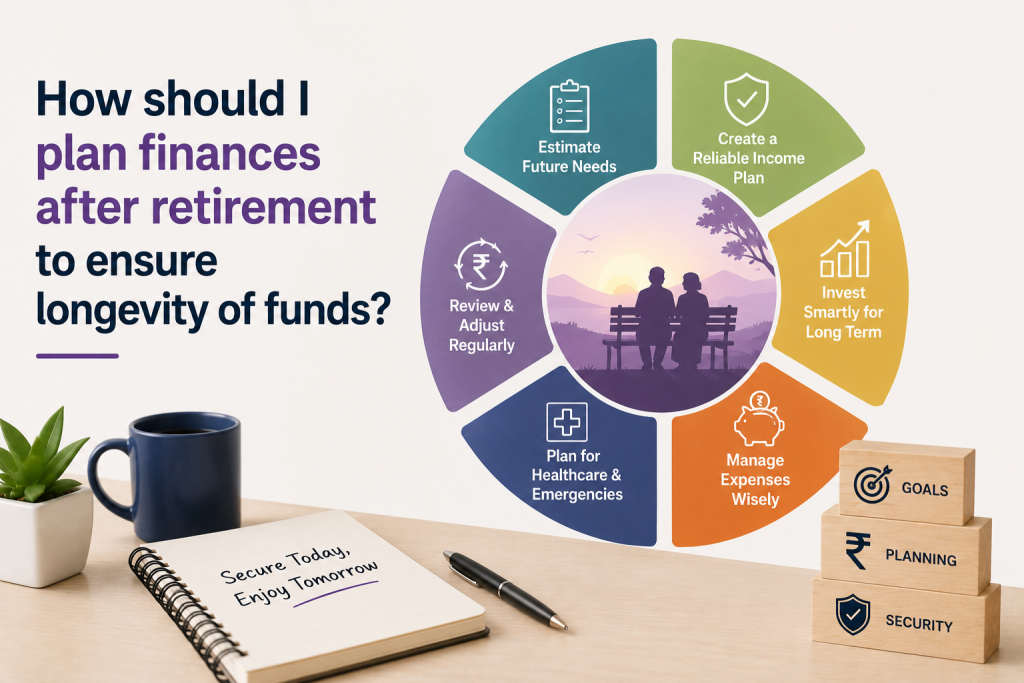
someone retires at 60 feeling reasonably set. the first few years pass without much drama. inflation gets to work. the ₹50,000 that covers a month at 60 needs ₹1 lakh by 75. call it ₹1.5 lakh by 85.
a rough patch in the markets takes a bite that never fully recovers. by the early 80s, the arithmetic quietly gives up.
the question worth asking is not how big the corpus is. it is how long it can keep paying before something breaks. that is a different problem. it has a fairly settled set of answers.
start with a withdrawal rate. not a lump sum.
the figure that runs the show is not the size of the corpus. it is how much is taken out every year.
the “4 percent rule” is a starting point. withdraw 4 percent in year one. raise it with inflation each year after.
trouble is. it came from american research built around a 30-year retirement. indian inflation has usually run hotter. lifting that 4 percent straight off the shelf can leave things finer than desired.
easier to turn it around. build toward a corpus of roughly 25 to 30 times annual spending. begin drawing somewhere around 3 to 4 percent of it. plan to live a long time. past 90, not up to some neat average. betting on an early death is the costliest assumption.
| if annual expense is | a 25x corpus |
a 30x corpus |
| ₹6 lakh | ₹1.5 crore | ₹1.8 crore |
| ₹9 lakh | ₹2.25 crore | ₹2.7 crore |
| ₹12 lakh | ₹3 crore | ₹3.6 crore |
ballpark, not scripture. a pension, rental income, or a paid-off house changes the picture.
the bucket strategy. how money survives bad years.
the danger is not a market drop on its own. it is a drop that lands while money is being pulled out. units are sold at the bottom to pay for monthly expenses. those units never climb back. the corpus wears that loss permanently.
there is a name for it. sequence-of-returns risk. two people can earn the same average return across retirement and end up worlds apart. based on when the ugly years turned up.
the solution is making sure growth money is never sold at the worst possible time. carve the corpus into three parts.
|
bucket |
holds | made of |
job |
| 1 – spend | 1-3 years of expenses | liquid funds, sweep-in fds, savings | what is lived on. never sees the market. |
| 2 – stability | next 4-7 years | scss, fds, pomis, rbi floating rate bonds | predictable income. refills bucket 1. |
| 3 – growth | 7+ years out | equity and hybrid funds | beats inflation. tops up bucket 2 in good years. |
the way it runs day to day is simple. spend from bucket 1. as that drains, bucket 2 fills it back up. in years the market treats well, a little is lifted off bucket 3 to refill bucket 2. in years it does not, bucket 3 is left alone.
that waiting is the whole point. it keeps the retiree solvent.
do not go fully safe. that is how a corpus dies slowly.
instinct quietly leads people off a ledge.
at 60 the gut says move it all into fds. into the guaranteed stuff. sleep easy. feels like the careful thing to do.
it is not.
picture a 25-year retirement. inflation at 6 percent. the cost of living roughly triples by the end. now set that against a portfolio earning a flat 7 percent with nothing growing quicker than prices. it cannot keep step. it sheds a little buying power every year. quietly. on and on. until there is nothing left to shed.
holding some equity in retirement is not reckless. it is what stands between money and a slow fade in real terms.
the old “100 minus your age” line lands a 60-to-70-year-old at roughly 30 to 40 percent in equity. nudge it up or down depending on how much market wobble can be sat through without doing something silly. just keep a piece growing. that is the instruction.
build a guaranteed-income floor for the essentials.
cover the bills that cannot be skipped with income fully banked on. leave the market-linked money for the extras. trips. grandkids’ presents.
|
instrument |
what it gives |
worth noting |
| scss | ~8.2% p.a., paid quarterly | max ₹30 lakh per person. a 60+ couple can hold ₹60 lakh across two accounts. interest is fully taxable. |
| pomis | steady monthly income | modest limits. handy for laddering. |
| bank fds (senior rates) | predictable, flexible tenures | seniors get a rate bonus at most banks. |
| rbi floating rate savings bonds | government-backed income | rate resets every so often. |
| annuity | income for life | certainty, yes. but rates are nothing special. most people buy it for a slice, not the whole pot. |
scss has sat at 8.2 percent for several quarters. it pays better than what big banks give on fds. no surprise it does heavy lifting in many retiree portfolios.
one word of caution. resist the urge to dump everything into it. between the ₹30 lakh ceiling and the lock-in, it is one tool in the box. not the box.
how withdrawals are made matters as much as what is held.
tax nibbles away at retirement income. the rules moved recently. plenty of advice floating around online quietly stopped being true.
two things to hold onto.
one. equity and hybrid funds go easy on tax when cashed out. long-term gains on equity funds are taxed at 12.5 percent. only on whatever spills over ₹1.25 lakh in a year. drawing income through a systematic withdrawal plan from an equity-leaning fund can cost less tax than taking the same rupees as fully-taxable fd or scss interest.
two. debt mutual funds have lost the advantage they used to carry. buy one on or after april 1, 2023. taxed at slab rate however long held. no indexation. tax-wise, that is just an fd wearing a different coat.
which is why retirees in higher brackets have moved their conservative money into arbitrage funds instead. those still get the kinder equity treatment. in practice. each year, draw from whichever pocket is most tax-efficient. use the ₹1.25 lakh equity exemption instead of letting it slip by.
ring-fence healthcare. separately.
medical costs climb faster than ordinary prices. a single bad spell in hospital can rip straight through a plan assembled over years.
give health its own corner. a strong senior health policy. behind it, a medical buffer kept well clear of the spending corpus.
the reason is one sentence. no medical shock should ever force selling growth assets in a falling market.
a sample portfolio.
picture a moderate-risk retiree. ₹2 crore corpus. ₹8 lakh annual spending.
|
sleeve |
allocation | roughly |
purpose |
| liquid/cash (bucket 1) | ~8% | ₹16 lakh | 2 years of spending. zero market risk. |
| safe income (bucket 2) | ~45% | ₹90 lakh | scss + fds + bonds for steady payouts. |
| growth (bucket 3) | ~45% | ₹90 lakh | equity/hybrid funds to beat inflation. |
| health buffer | separate | – | outside the spending corpus. |
a shape. not a prescription. where the lines fall depends on the corpus, monthly spending, any pension or rent coming in, and who is leaning on the retiree for support.
the yearly habit that keeps it alive.
none of this is set-and-forget. once a year, line up what was actually spent against the rate meant to be drawn. rebalance the buckets.
deal with the dull but genuinely important stuff. nominations up to date. a valid will on file. family able to access every account without a fight.
FAQs
1. how much corpus is needed to retire comfortably in india ?
the usual rule of thumb is 25 to 30 times annual expenses. spend ₹9 lakh a year and the target is roughly ₹2.25 to 2.7 crore. a pension, rental income, or a paid-off home reduces that number.
2. what is the safe withdrawal rate for indian retirees ?
many planners suggest starting near 3 to 4 percent of the corpus in year one. raise it only with inflation. since indian inflation tends to run high, leaning toward the lower end buys a cushion.
3. should equity be kept in the portfolio after retirement ?
usually yes, at least some. across a 20 to 25 year retirement, inflation can triple expenses. an all-fd portfolio cannot keep up. a handy starting reference is “100 minus age” in equity. adjust for personal comfort.
4. what is the bucket strategy ?
the corpus is split three ways. one to three years of expenses in cash. the next several years in safe income products. the long-term money in equity. spending only from the cash bucket means a crash never forces selling equity.
5. is scss enough for retirement income ?
it is a good base. around 8.2 percent paid quarterly. government-backed. but it caps at ₹30 lakh per person and the interest is taxable. use it as the workhorse of the safe sleeve, not the whole plan.


