


A US ETF allows an Indian investor to get access to hundreds of companies with one trade. A fund such as VOO follows the S&P 500 which includes the US companies across all industries. QQQ follows the Nasdaq 100 which is mostly focused on technology. VTI covers the US stock market.
The way to buy one is not difficult. It has some steps that are special when dealing with investments from another country. The money has to go from an Indian bank account to a US brokerage account. The trade has to happen when the US market is open.
the requirements
Before making a purchase three things must be ready.
A GIFT City brokerage account. The account needs to be created with a service that is registered with the International Financial Services Centres Authority (IFSCA). Services like INDmoney, Dhan, Upstox and NSE IX Global Access provide this. The KYC process includes PAN, Aadhaar and a video check. It can be done online.
A W-8BEN form. This form proves that the person is not a US citizen and helps lower the tax on dividends from 30% to 25%. Most services collect this during the sign-up.
A funded account. The money has to be in the brokerage account before the trade. It moves from the bank account through the Liberalised Remittance Scheme. The bank changes rupees into dollars. Sends them to the GIFT City account.
the money transfer
The money transfer is the part that needs the attention.
The investor sends a request through the banks banking or the services built-in money transfer system. Form A2, the statement of why the money’s being sent is necessary. The reason code says the transfer is for an investment.
The bank changes the rupees into dollars at the rate adding a forex spread that usually ranges from 0.5% to 1.5%. The dollars are then sent to the GIFT City brokerage account using SWIFT.
The money usually arrives within 24 to 48 working days. Once the money is added the investor can make the trade.
the trade
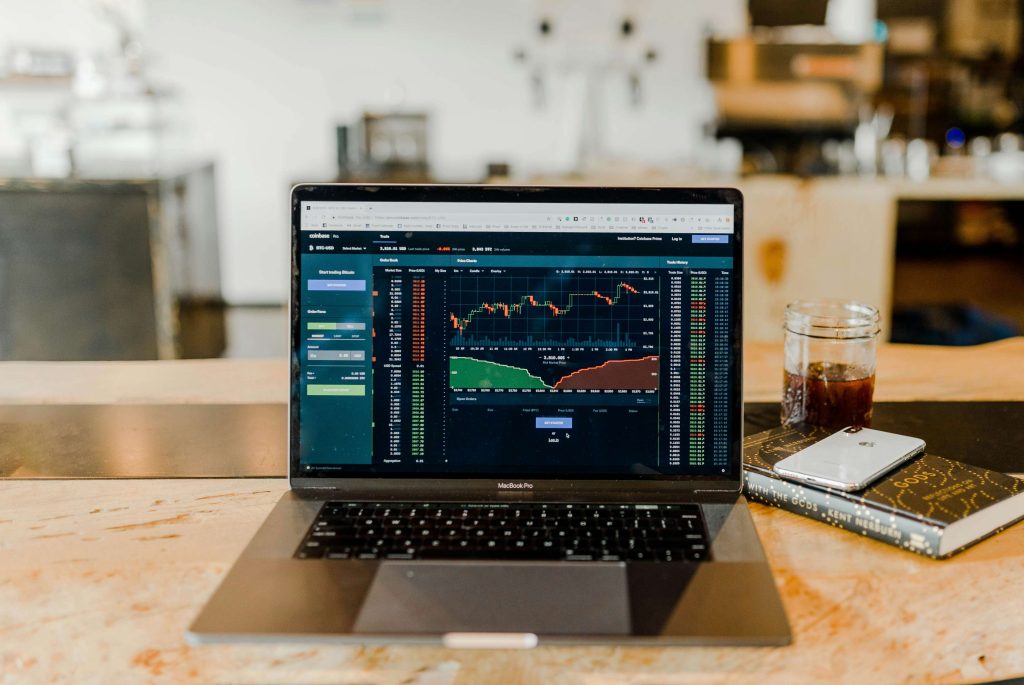
The trade is made on the services trading page. The process is like buying a stock with two differences: the trade is in dollars and the trade happens when the US market is open.
Pick the ETF. Search for the code like VOO, QQQ or VTI. The service will show the price the price range for the day and the cost of the fund.
Choose the type of trade. A market order happens immediately at the price available. A limit order only happens at a price or better. For easy to trade ETFs like VOO or QQQ a market order during the main time usually fills at a price very close to what was expected. For ETFs a limit order gives more control.
Enter the amount. Many services allow buying parts of a share. The investor can put in a dollar amount instead of a number of shares. A $100 trade for VOO buys the part of a share that corresponds to that amount.
Make the trade. The order goes to the US exchange and matches with others. The trade is confirmed in seconds for easy to trade ETFs.
the timing
US ETFs trade during US market times. For an investor that means from 7:00 PM to 1:30 AM IST during daylight saving and from 8:00 PM to 2:30 AM IST during standard time.
The main time is when the most money is moving and the prices are closest. Before the time and after hours the money is less and the prices are wider. For the trade the main time is better.
Some services allow orders to be placed outside market time and saved for the start. The trade happens when the market opens, at the opening price.
the costs
Brokerage. Varies with the service. Dhan charges 0.25% of the trade value. Tickertape starts at 0.15%. Some services offer no charge on ETFs.
Forex spread. The banks extra charge over the rate between banks, 0.5% to 1.5%. This is the cost that can be changed.
Expense ratio. US ETFs have expense ratios. VOO charges 0.03% QQQ charges 0.20%. Vti charges 0.03%. These are taken from the fund every day not sent as a bill.
TCS. Once the total money sent through LRS passes ₹10 lakh in a year 20% TCS is added on the extra. It can be used to reduce the tax or is returned but it holds the money.
the tax rules
US ETFs are considered as securities under Indian tax rules.
Capital gains. If kept for than 24 months the gains are taxed at 12.5% without adjusting for inflation. If kept for 24 months or less the gains are added to income. Taxed at the rate of the person. The ₹1.25 lakh long-term gain tax exemption does not apply, as that is for certain Indian listed shares.
Dividends. The US takes 25% if Form W-8BEN is on file. India taxes the dividend at the persons tax rate. Form 67 lets the person use a Foreign Tax Credit to reduce the US part.
Schedule FA. People who are residents and usually live in India must tell about all assets in Schedule FA of their tax return including US ETF investments. The report is needed in years when no shares were sold and no dividends were received.
what individual investors should know
Making a trade for a US ETF from India needs three things: a GIFT City brokerage account that has money, a way to use the services trade window and a knowledge of the tax rules.
The money transfer is the part that takes the longest. The trade itself is fast. The tax and reporting rules happen after the trade. Need to be part of the yearly tax plan.
For someone starting with an amount a big index ETF like VOO or VTI is a good first choice. The cost is low the money is easy to move. The variety is already there.
Frequently Asked Questions
1. Can Indian citizens buy US ETFs?
Yes. Indian citizens can buy US-listed ETFs using the LRS path through GIFT City services that’re under IFSCA. The yearly limit is $250,000 per person.
2. What is the smallest amount needed to buy a US ETF from India?
Most GIFT City services support buying parts so the smallest can be as low as $1 which is about ₹90. NSE IX Global Access has no set minimum for some ETFs.
3. What are the US market times for ETF trading from India?
The main time is from 7:00 PM to 1:30 AM IST during daylight saving and from 8:00 PM to 2:30 AM IST during time. The main time has the most money moving.
4. How are gains on US ETFs taxed in India?
US ETFs are considered securities. If held for than 24 months the gains are taxed at 12.5% without adjusting for inflation. If held for 24 months or less the gains are added to income. Taxed at the persons rate. The ₹1.25 lakh long-term gain tax exemption does not apply.
5. Should I report US ETF holdings in my tax return?
Yes. Residents and people who usually live in India must tell about all assets, in Schedule FA of the tax return including US ETF holdings even in years when no shares were sold and no dividends were received.


