


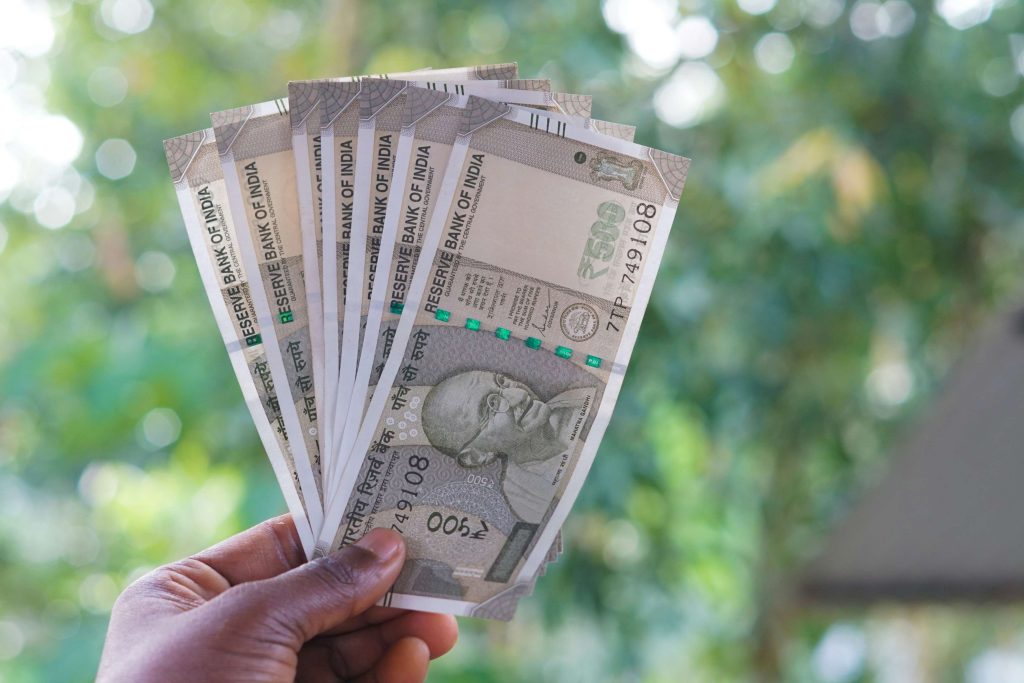
Withdrawing money from a US stock account to India means moving settled cash in dollars from the trading platform to a bank account in India that’s in the investor’s own name. The platform sends a wire in dollars. An intermediary bank may take a fee along the way. The Indian bank then converts the dollars into rupees at its exchange rate and credits the account.
The process to withdraw money from a US stock account to India is simple.. There are a few conditions that affect how quickly and how cheaply the money arrives. The cash must be settled. The bank details must match the investor’s name.. The fees from the platform and the bank add up. For investors the 180-day rule also sets a deadline for money that is not reinvested.
Steps to withdraw money
| Step | What to do | Points to check |
|---|---|---|
| 1. Confirm settled cash | Check the balance in the account. | Proceeds of a sale are available after the trade settles. For US stocks this is one business day after the sale. |
| 2. Verify the bank account | Register an Indian bank account in the investor’s own name. | A third-party account is generally not accepted. |
| 3. Enter the withdrawal amount | Choose the amount in dollars. | Check the minimum amount and any daily limit. |
| 4. Check the fees and the rate | Look at the platform’s withdrawal fee and the expected arrival time. | A fixed fee takes a share of a small withdrawal. |
| 5. Submit and track | Submit the request. Keep the reference number. | The platform processes it. The wire then moves through banks. |
| 6. Record | The Indian bank credits the rupees. An inward remittance advice is issued. | Keep the advice the exchange rate used and the date for the tax file. |
Timing and costs
| Item | What to expect |
|---|---|
| Time to arrive | Often a few business days from the request. This depends on the platform the banks and the Indian bank. |
| Platform fee | Zero on some platforms. On others it is a fee or a percentage. |
| Intermediary bank charge | A correspondent bank can deduct a fee from the dollar wire before it reaches India. |
| Currency conversion | The Indian bank converts the dollars at its rate. This includes a margin. |
| Tax on the withdrawal | None on the transfer itself. Capital gains tax and dividend tax arise on the sale and the earlier dividends. |
As an example a withdrawal of $1,000 at ₹90 per dollar is ₹90,000 before charges. A $10 platform fee and a $15 intermediary charge reduce it to $975. That is ₹87,750. So fixed fees of $25 cost 2.5% on this amount.. Only 0.25% on $10,000.
What decides how much arrives
| Factor | Effect |
|---|---|
| Size of the withdrawal | Fewer, larger withdrawals spread the fixed fees better than small ones. |
| The platforms route | Some routes use rails and cost less than a wire through several banks. |
| The exchange rate | The rate on the day of conversion decides the rupee amount. |
| Bank holidays | US and Indian holidays slow the transfer. |
Rules for resident investors
| Rule | What it means |
|---|---|
| The 180-day rule | Sale proceeds and income that are not reinvested in a permitted investment must be returned to India within 180 days of receipt. |
| Own-name account | The receiving bank account must be in the investor’s name. |
| Records | The remittance advice and the dates support compliance and the tax return. |
Non-resident Indians (NRIs)
The LRS rules do not apply. The country of residence sets what happens to the money.
Common problems
| Problem | Likely cause |
|---|---|
| Withdrawal request rejected | A name mismatch between the account holder and the bank account.. Unsettled cash. |
| Money not credited after days | An intermediary bank delay or a missing detail. The platform can trace this with the reference number. |
| Amount lower than expected | Platform fees, intermediary charges and the bank’s conversion margin. |
| No inward remittance advice | The bank issues it on request. The platform’s statement helps as supporting proof. |
What investors should take from this
Withdrawing is straightforward when the cash is settled and the bank details match. The cost depends mostly on fixed fees and the conversion rate. Bundling withdrawals noting the receipt dates and keeping the remittance advice keep the process cheap and the records clean.
Kuvera’s guides on how US stock trade settlement works and on transferring money from India for US stock investing cover the two ends of the journey.
Frequently Asked Questions
1. How long does it take to withdraw from a US stock account to India?
Often a few business days after the request. This depends on the platform the banks involved and holidays.
2. Can money be withdrawn to someone ‘s bank account?
Generally no. The Indian bank account must be in the investor’s name.
3. Is there a tax on withdrawing money to India?
No tax arises from the transfer. Tax arises on the gains and dividends that produced the money.
4. Are there charges for withdrawals?
Some platforms charge a fee. Intermediary banks can deduct charges. The Indian bank applies a conversion margin.
5. Must the money be withdrawn within a time limit?
For investors unused proceeds and income must be returned to India or reinvested within 180 days of receipt.
Investments in securities are subject, to market risks. Read all documents carefully. Exchange control rules mentioned here reflect rules and can change.


