


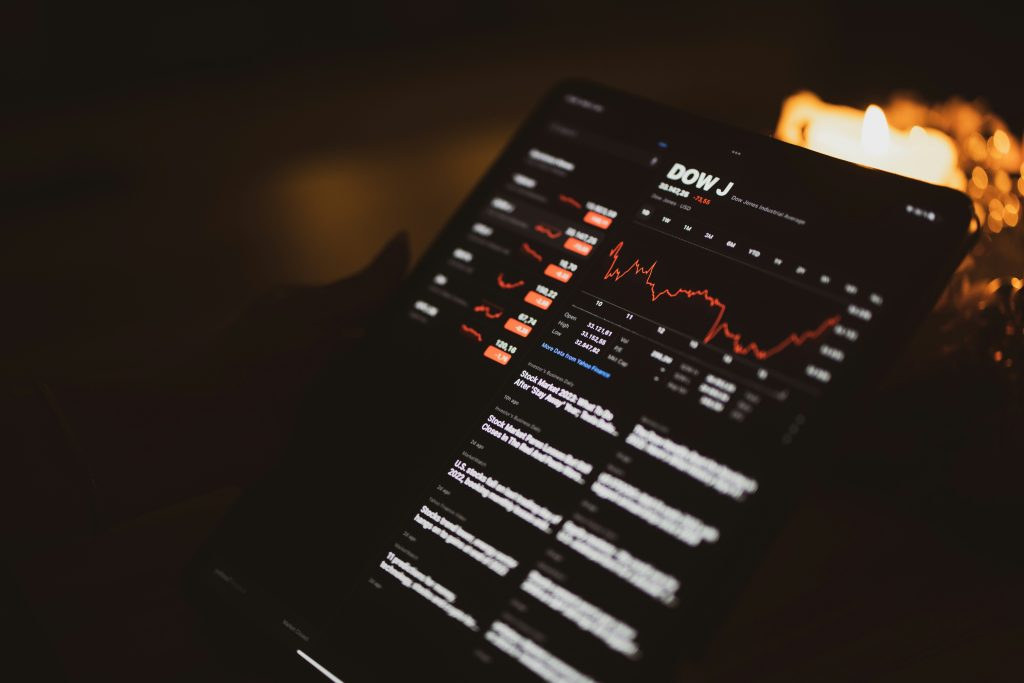
US stock market futures are contracts that show where the major stock indices are expected to start trading. These contracts are available for 24 hours on weekdays long before the main stock market session begins. For example if S&P 500 futures are up 0.5% at 6:00 PM time it suggests the US market might open higher at 7:00 PM. However this signal can. Disappear once the regular trading session starts.
What US stock market futures tell investors is a sign of what people think about the market before it opens. This is based on the news and data that came in while the real market was closed. For an investor, who can trade US stocks in the evening and night futures are a way to see the mood before making a trade.. They do not say what will happen at the end of the day.
What a stock index future is
| Term | Meaning |
|---|---|
| Futures contract | An agreement to buy or sell an index at a price on a future date traded on an exchange. |
| Index future | A contract that follows an index like the S&P 500 the Nasdaq-100 or the Dow. |
| Cash settlement | At the end of the contract money is exchanged of shares. |
| Expiry months | Major US index futures end in March, June, September and December. |
| Fair value | The price a future should have compared to the cash index after considering interest and expected dividends. |
The US index futures
| Future | Index it follows | What it reflects |
|---|---|---|
| E-mini S&P 500 | S&P 500 | The overall large-company market |
| E-mini Nasdaq-100 | Nasdaq-100 | Large technology and growth companies |
| E-mini Dow | Dow Jones Industrial Average | 30 big well-known companies |
| E-mini Russell 2000 | Russell 2000 | Smaller US companies |
These contracts are available on the Chicago Mercantile Exchange (CME) from Sunday evening to Friday evening in US Eastern Time with a short break each day. This means they keep moving when the stock market is closed at night on closes and during big news events.
What the signal. Cannot tell
| What futures can tell | What they cannot tell |
|---|---|
| The direction and size of the move when the market opens | Where the market will end the day |
| How markets have reacted to news like an economic report or overseas changes | Which individual stocks will go up or down |
| If the mood before the open is calm or stressed | If a move will last when more traders join the regular session |
| How big the opening gap might be for a limit order | The reason for every move |
How to read futures before placing an order
| Step | What to check |
|---|---|
| 1. Look at the percentage change | Compare the futures price with the days closing price to see the likely opening move. |
| 2. Compare the three indices | A rise in the Nasdaq-100 but not the Dow shows technology is driving the mood. |
| 3. Check the news calendar | Earnings, inflation data and central bank decisions explain big futures moves. |
| 4. Allow for gaps | If futures point to a gap up or down a market order could fill at a price far from the last close so a limit order is better. |
| 5. Watch the hour | Many moves in futures can fade or continue once the regular session starts. |
The difference between US futures and GIFT Nifty
| Feature | US index futures | GIFT Nifty |
|---|---|---|
| Market they signal | The US stock market | The stock market mainly the Nifty 50 |
| Where traded | CME in the US | GIFT City in India |
| Use for an Indian investor | A sign of what to expect in the US session | A sign of what to expect in the Indian session |
US futures that move a lot overnight often affect the Indian market the next morning so many Indian investors watch both.
Access for investors
Indian residents can invest in US markets under the Liberalised Remittance Scheme (LRS). There are rules about using these funds for margin trading and derivatives. Because of this US index futures are mostly used by investors as a signal and not as something to trade directly. Exposure to the market comes through stocks, ETFs or funds.
Risks of over-reading futures
| Mistake | Why it misleads |
|---|---|
| Treating the futures move as certain | The actual market might open differently and then change. |
| Trading on moves | A move of a few tenths of a percent is just normal noise. |
| Ignoring the cost of frequent trading | Forex spreads and brokerage fees cut returns on short-term trades. |
| Reacting to overnight trading | Overnight prices can jump on low volume and then settle back when the regular session begins. |
What investors should take from this
Futures help to understand the mood before the US market opens. They are most important for choosing the price of a limit order. A long-term investor does not need to check them every day because daily moves in futures do not say much about the value of a company held for years.
Kuveras guides on US trading hours from India and on limit orders for US stocks explain how to use the information from futures when placing an order.
Frequently Asked Questions
1. What are US stock market futures?
Contracts that follow US indices like the S&P 500 the Nasdaq-100 and the Dow and trade all day on weekdays.
2. Do futures predict how the US market will open?
They show the direction and size of the opening move but the market can open differently and change later.
3. When can Indians check US futures?
At any time they trade, which includes the morning and afternoon well before the US market opens in the Indian evening.
4. Can Indian residents trade US index futures?
There are rules about using LRS funds for margin trading and derivatives so for most investors futures are a signal and not a product.
5. How are US futures different from GIFT Nifty?
US futures show the US market while GIFT Nifty shows the markets likely open.
Investments in securities are subject, to market risks. Read all documents carefully. Futures prices are indicative. Do not guarantee the markets opening or closing level.


