


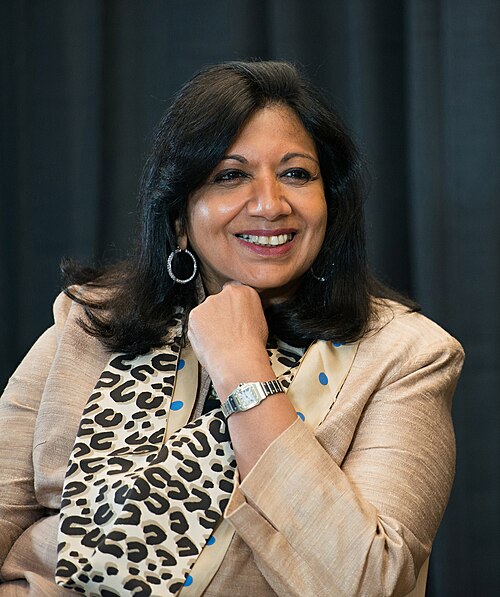
Kiran Mazumdar-Shaw’s net worth sits at $3.3 billion as of September 2026 . She started Biocon in 1978 as an industrial enzymes producer, in a joint venture with an Irish company, with a loan of ₹10,000 from a friend . The company is now one of the world’s top five biosimilar companies, with ₹16,927 crore in revenue in FY26 .
The wealth is concentrated in two listed companies. Biocon is the operating business. Syngene International, spun out as a contract research organisation, is the second pillar. And Immuneel Therapeutics, a personal bet on cell and gene therapy, is the third.
Biocon Equity: The Core Holding
Biocon’s promoter group holds 44.68% of the company as of June 2026 . That figure has come down from 54.45% in December 2025, following two qualified institutional placements totalling nearly $1 billion that were used to retire debt .
The company has been through a significant transformation. It acquired Viatris’ global biosimilars business in 2022 for $3.3 billion, a deal that brought debt of $1.2 billion . By FY26, that debt had been cut to $1.1 billion, with further reduction expected from operational cash flow .
The business is now in what Mazumdar-Shaw calls its “acceleration” phase . Biocon holds interchangeable biosimilar insulin analogues in the US market, including insulin glargine and insulin aspart, and has over 25% US market share for its cancer drugs Fulphila and Ogivri . The insulin franchise has crossed $300 million in revenue .
The next phase of growth hinges on the “diabesity franchise” — a combination of insulin and GLP-1 products. Semaglutide, the company’s biosimilar version of the popular weight-loss drug, is expected to scale from FY28. Mazumdar-Shaw has said Biocon’s vertical integration and device expertise from the insulin business give it a natural advantage in GLP-1 analogues .
Syngene International: The Contract Research Play
Syngene International is Biocon’s contract research and development arm. The promoter group holds 52.59% of the company, a figure that has remained stable across recent quarters .
The shareholding is structured differently from Biocon. Biocon Limited itself holds 52.41% of Syngene, with Kiran Mazumdar-Shaw holding a negligible direct stake of 0.01% . That means Syngene’s value to her net worth flows through her stake in Biocon, rather than through direct ownership.
Syngene provides integrated discovery, development, and manufacturing services to pharmaceutical and biotech companies globally. It is a quieter part of the portfolio than Biocon, but it contributes to the group’s overall valuation.
Immuneel Therapeutics: The Personal Cancer Bet
Beyond the listed companies, Mazumdar-Shaw has invested in her personal capacity in Immuneel Therapeutics, a Bengaluru-based cell and gene therapy startup she co-founded .
The company makes CAR-T therapy, a form of cancer treatment where a patient’s immune cells are extracted, engineered in a lab to fight cancer, and reinfused. The treatment has been a breakthrough globally but remains expensive, costing between $400,000 and $700,000 in Western markets .
Immuneel has brought that cost down to roughly 10% of the Western price, and in June 2026 raised over ₹100 crore to expand manufacturing and take its therapy to Southeast Asia, the Asia Pacific, and the Middle East . The round saw participation from Singularity AMC, Rainmatter by Zerodha, and existing investors including Eight Roads Ventures and F-Prime Capital .
Amit Mookim, Immuneel’s chief executive, has said the company’s focus is on making the treatment available at lower costs through localising supply chains and improving manufacturing efficiency. “What we are trying to solve for is building capacity at scale in cost-effective ways,” he told ET .
The Succession Plan and the Road Ahead
Mazumdar-Shaw has named her niece, Claire Mazumdar, as her successor in a structured five-year transition . Claire founded Bicara Therapeutics, which began as a Biocon subsidiary and later listed independently, earning a breakthrough designation for one of its assets. Biocon holds about 10% of Bicara .
The transition will see Claire work alongside Mazumdar-Shaw before stepping into the chairperson role. Mazumdar-Shaw has been explicit that this is not an immediate handover, saying Claire has “earned her stripes” by demonstrating she can raise capital, run a public company, and build a pipeline .
On the operational side, the focus is on debt reduction and the FY27 launch calendar. Denosumab has entered the US market. Aflibercept launches in the second half. KIRSTY, the insulin aspart product, is being pushed aggressively . The full interest benefit from the debt reduction, roughly ₹75 crore per quarter, will reflect in FY27 numbers .
What Retail Investors Can Take From This
Concentration in a single sector can build extraordinary wealth. Mazumdar-Shaw’s fortune is tied to biopharma, a sector she has worked in for nearly five decades. That concentration created the $3.3 billion net worth. It also means her wealth moves with the sector’s regulatory and pricing cycles.
The biosimilar opportunity is structural. Biocon’s position as one of the world’s top five biosimilar companies is not a short-term trade. It reflects a long-term shift in how healthcare systems seek lower-cost alternatives to expensive biologics .
Personal bets can extend beyond the listed portfolio. The Immuneel investment is not part of Biocon’s balance sheet. It is a personal commitment to a technology that could change cancer treatment in India. For retail investors, the lesson is not about copying the investment, but about understanding how founders with deep sector knowledge sometimes place separate bets on emerging technologies .
Succession planning matters. The Claire Mazumdar transition is a structured, multi-year process. For long-term investors in family-controlled businesses, a clear succession plan is a governance positive .
Frequently Asked Questions
1. What is Kiran Mazumdar-Shaw’s net worth in 2026?
Forbes records her real-time net worth at $3.3 billion as of September 2026 . Other sources place the figure between $2.3 billion and $3.4 billion, depending on the date and methodology .
2. How much of Biocon does the promoter group own?
The promoter group holds 44.68% of Biocon as of June 2026 . That figure came down from 54.45% in December 2025, following two qualified institutional placements that raised nearly $1 billion to retire debt .
3. What is Kiran Mazumdar-Shaw’s stake in Syngene International?
The promoter group holds 52.59% of Syngene International . Biocon Limited itself holds 52.41% of Syngene, with Mazumdar-Shaw holding a negligible direct stake of 0.01% . Her economic interest in Syngene flows through her stake in Biocon.
4. What is Immuneel Therapeutics and how much did it raise?
Immuneel Therapeutics is a Bengaluru-based cell and gene therapy startup co-founded by Mazumdar-Shaw. It makes CAR-T therapy for blood cancers. In June 2026, it raised over ₹100 crore from Singularity AMC, Rainmatter by Zerodha, and existing investors . The company has brought the cost of CAR-T therapy down to roughly 10% of Western prices .
5. What is Biocon’s financial performance in FY26?
Biocon reported ₹16,927 crore in revenue in FY26, the year it integrated its biosimilars and generics businesses . The company has cut acquisition-related debt from $1.2 billion to $1.1 billion, with further reduction expected from operational cash flow .


