


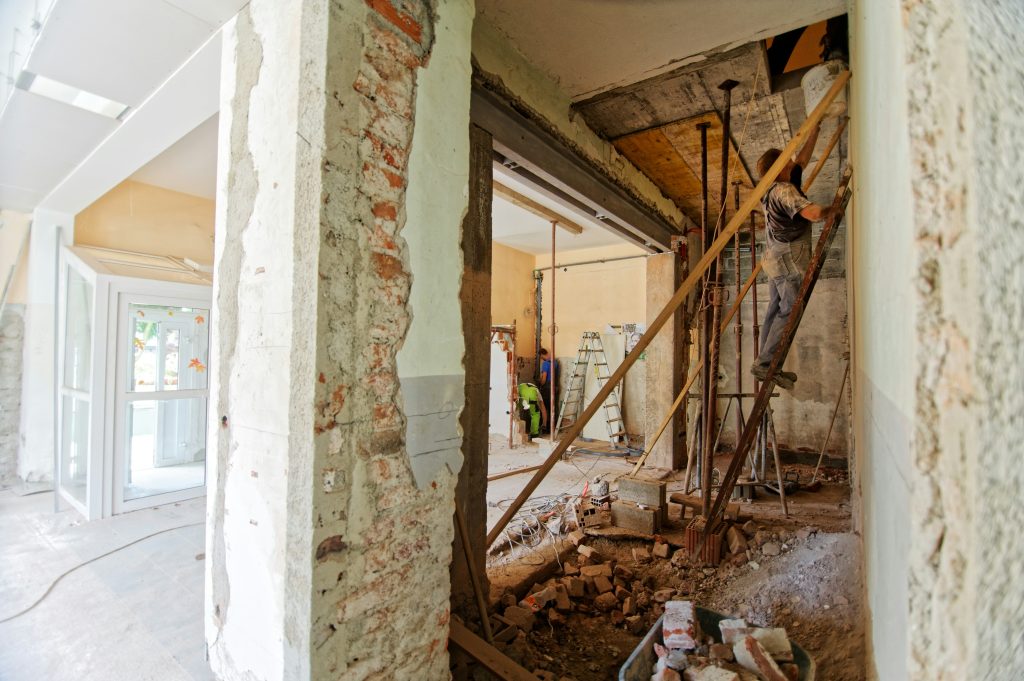
A homeowner needs ₹12 lakh to renovate a kitchen and two bathrooms. Three offers sit on the table.
The first comes from the existing home loan lender, offering a top-up at 8.75% per annum over seven years, with a processing fee of 0.5%. The second is a standalone renovation loan from a public sector bank at 8.00% over ten years, with a 1% processing fee . The third is an unsecured personal loan from an NBFC at 12.5% over five years, with a 2% processing fee.
The 8.00% loan looks cheapest on rate. But the ten-year tenure pushes total interest above the seven-year top-up. And the 1% processing fee on ₹12 lakh comes to ₹12,000, against ₹6,000 on the top-up.
Working the full cost across all three changes which one ends up ahead.
the first comparison is the apr, not the rate
The advertised rate is one number. The annual percentage rate is the number that matters. It pulls in interest, processing fees, documentation charges, and other upfront costs, then states everything as a single figure.
RBI requires regulated lenders to disclose the APR in the Key Fact Statement before the loan is signed. That document is the fastest way to line up two offers directly.
A loan quoting 8.00% with a 1% processing fee may carry a higher APR than one quoting 8.75% with a 0.5% fee. Comparing headline rates alone misses this.
the processing fee, in rupee terms
Processing fees on renovation loans vary sharply across lenders.
Indian Bank charges 1% on the loan amount . SBI charges 0.35% plus service tax, with a minimum of ₹2,000 and a maximum of ₹10,000 . On a ₹12 lakh loan, SBI’s fee works out to ₹4,200 plus tax, while Indian Bank’s comes to ₹12,000.
PNB structures its offering differently. It caps repair and renovation loans at ₹25 lakh, with furnishing costs included up to 10% of the home loan or ₹25 lakh, whichever is lower . No additional furnishing loan is offered alongside .
The fee gets deducted before disbursal. The EMI is still calculated on the full sanctioned amount. So the borrower pays interest on money that never reached the account.
the loan-to-value ratio
Renovation loans are secured against the property in most cases. The loan-to-value ratio is the loan amount divided by the property’s market value.
Canara Bank applies LTV caps of 90% for properties up to ₹30 lakh, 80% for ₹30 lakh to ₹75 lakh, and 75% above ₹75 lakh. Properties older than 10 years face tighter caps.
A borrower who puts 25% of the renovation cost from savings and finances the rest gets better pricing than one borrowing the maximum available.
the tenure trade-off
Longer tenures lower the EMI but increase total interest paid. On ₹12 lakh at 8.75%, a seven-year tenure costs about ₹4,07,000 in interest. Stretch it to ten years and the EMI drops, but total interest climbs to roughly ₹6,10,000.
A renovation is a consumption expense. It does not generate returns. Stretching the repayment schedule across ten years means paying interest long after the work has worn out. Kitchen cabinets and bathroom fittings rarely last that long.
Match the tenure to the useful life of the work. Structural repairs and roofing may justify a longer tenure. Paint, tiles, and fittings are better financed over a shorter window.
disbursal and documentation
Disbursal timelines vary by lender and by loan type.
Piramal Finance disburses funds within 48 hours of approval . Mahindra Home Finance takes 3 to 7 working days . Kotak notes that banks typically take 7 to 10 working days for renovation loan approval, while NBFCs and housing finance companies move faster .
The documentation load differs too. Piramal Finance and IIFL Home Loans require the sale deed or allotment letter, NOC from the builder or society, possession certificate, occupancy certificate, construction cost estimate, and co-owner consent . Mahindra Finance adds contractor quotes and business registration for self-employed applicants .
A top-up on an existing home loan requires minimal fresh paperwork because the lender already holds the property documents.
how much lenders are willing to fund
Maximum loan amounts vary widely across lenders.
Bank of Baroda offers up to ₹10 crore for home improvement . PNB caps at ₹25 lakh . Indian Bank’s IB Home Enrich scheme has a loan range of ₹1 lakh to ₹10 lakh . Piramal Finance offers ₹3 lakh to ₹2 crore .
The actual sanctioned amount depends on the renovation estimate, the property’s value, and the borrower’s repayment capacity.
the tax angle
Interest paid on a home renovation loan qualifies for deduction under Section 24(b) of the Income Tax Act.
For a self-occupied property, up to ₹30,000 per year can be claimed. This sits inside the overall ₹2 lakh home loan interest limit. For a let-out property, there is no upper limit.
The principal repayment does not qualify under Section 80C for renovation loans. That benefit applies only to home loans taken for purchase or construction.
The deduction is available only under the old tax regime. Under the new regime, Section 24(b) claims for self-occupied property are not available.
frequently asked questions
1. what is the most important factor when comparing renovation loans?
The annual percentage rate. It combines interest, processing fees, and other charges into a single comparable figure. Comparing headline interest rates alone is misleading. RBI requires lenders to disclose the APR in the Key Fact Statement before the loan is signed.
2. how much can be borrowed for a home renovation?
Maximum amounts vary by lender. Bank of Baroda offers up to ₹10 crore . PNB caps at ₹25 lakh . Indian Bank’s IB Home Enrich scheme offers ₹1 lakh to ₹10 lakh . Piramal Finance offers ₹3 lakh to ₹2 crore . The actual amount depends on the renovation estimate, the property’s value, and the borrower’s repayment capacity.
3. what are the processing fees on renovation loans?
Indian Bank charges 1% of the loan amount . SBI charges 0.35% plus service tax, with a floor of ₹2,000 and a ceiling of ₹10,000 . On a ₹12 lakh loan, SBI’s fee works out to ₹4,200 plus tax, while Indian Bank’s comes to ₹12,000. The fee is deducted before disbursal, but the EMI is calculated on the full sanctioned amount.
4. what is the difference between a top-up and a standalone renovation loan?
A top-up on an existing home loan requires minimal fresh paperwork because the lender already holds the property documents. Rates start around 7.25% per annum. A standalone renovation loan needs the full property document set, including sale deed, NOC, possession certificate, and an itemised renovation cost estimate . Rates run 8.00% to 10.40% for secured loans.
5. is the interest on a renovation loan tax deductible?
Yes, under Section 24(b). For a self-occupied property, up to ₹30,000 per year can be claimed within the overall ₹2 lakh home loan interest limit. For a let-out property, there is no upper limit. The deduction is available only under the old tax regime. The principal repayment does not qualify under Section 80C.


