Every rupee that leaves India for a US brokerage account moves under the Liberalised Remittance Scheme. The RBI allows a resident individual to remit up to $250,000 per financial year for permitted purposes, and overseas investment in stocks and ETFs falls within that list . No prior approval is needed. The limit is per person, not per household, and it resets every April .
The scheme is open to resident individuals only. Corporate entities, HUAs, and trusts cannot use LRS for this purpose .
The Three Ways to Move Money
Through an Indian broker with a US tie-up. Platforms like ICICI Direct, HDFC Securities, and Axis Securities have built access to NASDAQ and NYSE through partnerships with registered American brokers. You complete KYC, and the broker facilitates the LRS remittance through an authorised dealer bank . The convenience comes at a cost: brokerage and forex conversion charges run higher than domestic equity trades .
Through a global investing app. Vested Finance and a partner with US-registered brokers and handle the compliance on your behalf. Fractional shares are standard, so you can start with a small amount . These platforms simplify the funding process by integrating the LRS remittance step into their onboarding flow.
Through GIFT City. NSE International Exchange and India INX operate platforms inside the IFSC where US-listed stocks and ETFs can be traded. You open an account with an IFSCA-regulated broker, complete digital KYC, and fund the account by remitting money under LRS . The advantage is cost. India INX has tie-ups with banks that charge a fixed fee of around ₹200 and a spread of up to ₹0.50, compared to standard bank charges that can run ₹500 to ₹1,000 per transaction with higher spreads . For a $1,000 remittance, the India INX partnered bank route costs roughly ₹75,736 against ₹77,680 through a standard bank — about 75% less in charges .
The Bank Remittance Process Step by Step
Whichever route you choose, the money leaves through an authorised dealer bank.
Step 1: Complete KYC with the bank. The bank needs your PAN, Aadhaar, and a recent address proof. If you are using an Indian broker’s platform, the KYC is often already integrated.
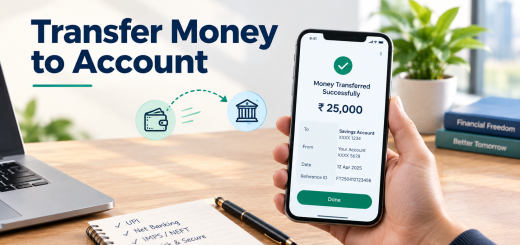
Step 2: Submit Form A2. This is the application-cum-declaration for remittance under LRS. It states the purpose of the transfer, which will be coded as an investment .
Step 3: Provide the beneficiary details. The overseas brokerage account’s SWIFT code, account number, and the exact beneficiary name. Errors here cause delays or rejections.
Step 4: The bank converts rupees to dollars. The exchange rate applied includes a margin, which varies by bank. This is where the GIFT City partnered banks offer a meaningful advantage .
Step 5: The funds are sent via SWIFT. The transfer typically reaches the overseas account within 24 to 48 working hours, subject to correct details and time zone differences .
Step 6: Save the acknowledgment and Form A2 copy. You will need these for tax filing and for the TCS credit .
The TCS Threshold and How It Works
Tax Collected at Source applies once your total LRS remittances cross ₹10 lakh in a financial year. The rate is 20% on the amount above that threshold for investment remittances . The ₹10 lakh limit is cumulative across all LRS purposes, including travel, education, and gifts. It is not specific to investments .
An example: remitting ₹18 lakh to fund a US brokerage account attracts no TCS on the first ₹10 lakh and ₹1.6 lakh on the remaining ₹8 lakh . That amount is not a penalty. It is an advance tax payment that appears as a credit in Form 26AS and gets adjusted against your final liability when you file your return, or refunded if it exceeds what you owe .
One practical consideration: the ₹1.6 lakh leaves your bank account immediately and stays blocked until the refund is processed. For large remittances, that liquidity impact is worth planning around .
Reporting After the Money Moves
The funding is only the first part of the compliance. Once the account is funded and invested, the foreign assets must be disclosed in Schedule FA of your income tax return if you are a Resident and Ordinarily Resident taxpayer . This applies whether or not you made any gains during the year . The brokerage account itself is a foreign asset, and so is every US shareholding .
Schedule FA follows the calendar year, 1 January to 31 December, while the rest of the ITR follows the financial year. The mismatch is expected, and a working paper that maps the two periods makes filing easier .
Non-disclosure carries exposure under the Black Money Act, with penalties that far exceed the tax itself .
What Retail Investors Should Take From This
The funding mechanics are settled. The LRS route is legal, the platforms exist, and the bank process is standard. What separates a smooth experience from a messy one is planning around the TCS threshold and keeping the documentation clean.
For large remittances, spreading the transfer across two financial years can reduce the amount of cash blocked by TCS at any one time, since the ₹10 lakh threshold resets every April . Keeping every Form A2 and bank acknowledgment makes the tax filing and TCS credit claim straightforward .
The GIFT City route through India INX or NSE IFSC is worth checking for the conversion cost advantage alone, particularly for investors who plan to remit regularly .
Frequently Asked Questions
1. How much money can an Indian resident send to a US brokerage account in a year?
Up to $250,000 per financial year under the Liberalised Remittance Scheme. The limit is per person and resets every April. Unused room does not carry forward .
2. What is the TCS rate on remittances for US stock investing?
20% on the amount exceeding ₹10 lakh in a financial year for investment remittances. The first ₹10 lakh is exempt. TCS is adjustable against your final tax liability or refundable .
3. What documents are needed for the bank remittance?
Form A2, PAN, Aadhaar or passport, address proof, and the beneficiary brokerage account details including SWIFT code. Save the acknowledgment and Form A2 copy for tax filing .
4. Is the GIFT City route cheaper than a standard bank remittance?
Yes. India INX partnered banks charge a fixed fee of around ₹200 and a spread of up to ₹0.50, compared to standard bank charges of ₹500 to ₹1,000 per transaction with higher spreads. For a $1,000 remittance, the cost difference is roughly ₹1,944 .
5. Do I need to report the US brokerage account in my Indian tax return?
Yes, if you are a Resident and Ordinarily Resident taxpayer. The account and all US shareholdings must be disclosed in Schedule FA, regardless of whether any gains were made during the year .