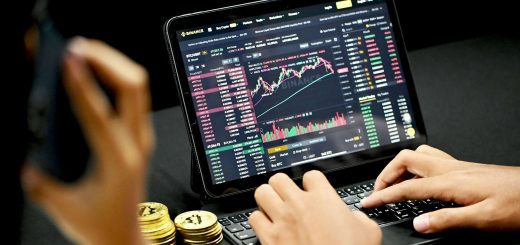
A market order is the straightforward instruction an investor can give. Buy this stock now. Sell this stock now. The order gets filled at the price that is available at that exact moment and the trade is completed.
That simplicity comes with its risk. The investor has no control over the price. They only control when to trade and whether to trade. For a easy to trade US stock like Apple or Microsoft the gap between the price they expect and the price they get is usually just a few cents.. For a smaller stock or during a time when the market is moving a lot that gap can be much bigger and make a real difference.
What a market order does
When a market order is made it goes to the exchange. Gets matched with the best possible opposite order. A buy order matches with the sell price. A sell order matches with the buy price.
The order usually gets filled in seconds for stocks that are traded a lot. The investor does not set a price limit. The trade happens at whatever the market’s offering at that exact moment.
The trade-off when compared to a limit order is simple. A market order ensures the trade happens. A limit order ensures the price is right. Neither one guarantees both.
Why Indian investors use market orders for US stocks
The US market starts at 7:00 PM IST during daylight saving and ends at 1:30 AM IST. When it is not daylight saving the market starts at 8:00 PM IST. Ends at 2:30 AM IST. For investors this time is not easy to manage. Staying up until 1:00 AM to watch a stock reach a price is not possible for most people.
A market order solves the time problem. The investor places the order when they can and the trade happens during market hours. There is no need to watch the price all the time or wait for a level.
For investors buying big-name US stocks with differences between buy and sell prices the trade quality is usually good. The price they get is close to what they expected. The difference is small.
When market orders carry risk
The risk of a market order goes up in certain situations.
Stocks that are not often traded. A stock that does not have a lot of trades has a bigger gap between the buy and sell price. A market order on such a stock can be filled at a price that’s much different from what was expected. The investor might end up paying more or getting less.
Sessions that’re very active. The first 30 minutes after the US market opens and the last 30 minutes before it closes are the wild. Prices change quickly. A market order placed during these times can end up at a bad price.
Extended hours. The time before the market. After it closes has less trading. A market order during these times can face gaps and not fill completely. Some GIFT City platforms only allow market orders during trading times for this reason.
Large trades. A big market order can push the price against the buyer. This is not an issue for retail investors who place trades of ₹50,000 to ₹5 lakh but it matters for larger amounts.
How slippage works
Slippage is the difference between the price the investor expects and the price the trade actually gets. For a market buy order slippage is positive if the stock fills at a price than expected. For a market sell order it is positive if the stock fills at a price.
For an US stock like Apple the difference between the buy and sell price is usually one to two cents. A market order for 100 shares might have slippage of a dollars in total. For a stock that does not trade often the difference can be 20 to 30 cents or more and the slippage can be much bigger.
For an investor who is converting rupees to dollars and paying a 1% to 1.5% forex fee, the slippage on a liquid stock is a small cost. On a liquid stock it can be a much bigger cost.
Market orders versus limit orders: which to use
Use a market order when:
The stock is big and easy to trade with a difference between buy and sell price.
The main goal is to enter or exit a position quickly.
The trade is small compared to the stocks trading volume.
The investor is okay with a chance of a different price for the guarantee of a trade.
Use a limit order when:
The stock is not often traded or the difference between buy and sell price is big.
The investor has a price in mind.
The trade is placed during the time before the market opens. After it closes.
The investor is willing to wait for the price instead of taking the current one.
For most Indian retail investors buying US stocks through GIFT City platforms a market order during regular hours is a good starting point. For situations a limit order offers more control.
What retail investors should take from this
A market order is a tool for speed not for getting the price. It works well when the stock is easy to trade the trade is small. The market is active. It is riskier when the stock is not often traded the trade is big. The market is not regular.
The main factor is how much the stock trades. A stock that has millions of shares traded each day has a price gap and can take market orders easily. A stock that only has thousands of shares traded each day does not. Knowing which group the stock falls into is the step before placing a market order.
The second step is knowing when to use a limit order. Market orders are the choice but they are not always the best. For any trade where the price’s important a limit order is a safer choice.
FAQs
1. What is a market order in US stock investing?
A market order is an instruction to buy or sell a stock away at the best price available. It ensures the trade happens, but not the exact price it will get filled at.
2. Can Indian investors place market orders for US stocks?
Yes. GIFT City platforms like INDmoney, Vested, Dhan and Upstox allow market orders for US stocks during trading hours. Some platforms do not allow market orders during late trading times.
3. What is slippage. How does it affect market orders?
Slippage is the difference between the price the investor expects and the actual price they get. For a stock like Apple slippage is usually a few cents. For a stock that does not trade often it can be 20 to 30 cents or more which adds up to a cost.
4. When should a market order not be used?
Market orders are riskier during moving times for stocks that do not trade often during early or late trading hours and for large trades. In those situations a limit order offers control over the price.
5. What are the US market hours in IST, for market orders?
Regular trading hours run from 7:00 PM to 1:30 AM IST during daylight saving and 8:00 PM to 2:30 AM IST during time. Market orders usually get filled during these hours.